
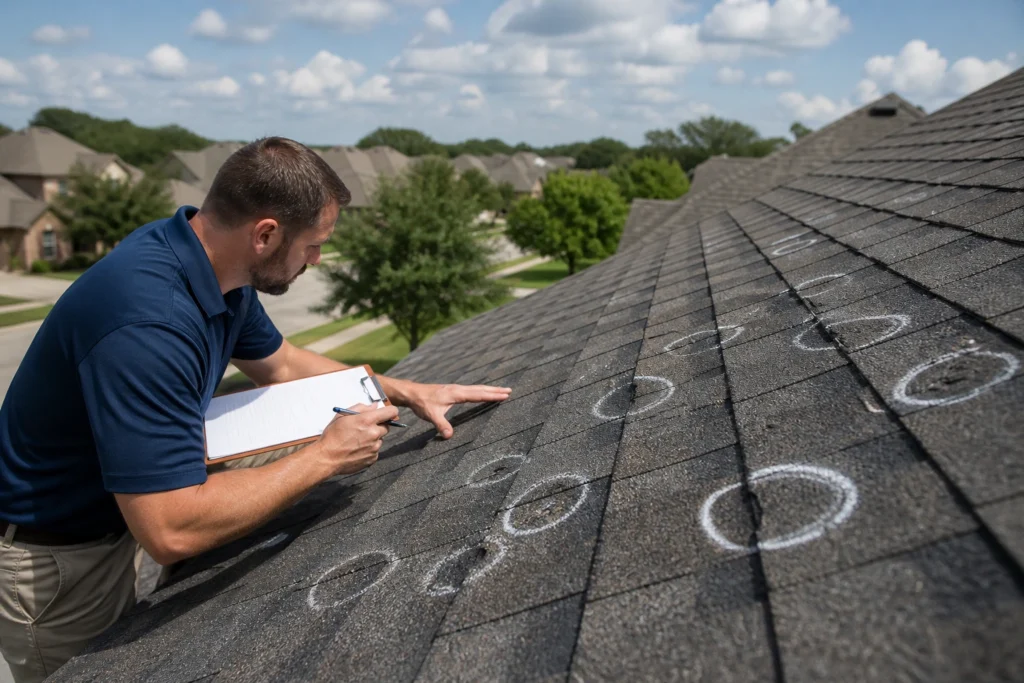
When a hailstorm hits your roof in Texas, the damage is obvious. What’s not obvious? Who you should trust to handle your claim. That’s where Public Adjuster vs. Insurance Adjuster for Hail Claims in Texas becomes more than a comparison it becomes a financial decision. Because here’s the truth. The person evaluating your damage has a direct influence on how much you get paid. Not just slightly. Significantly.
I’ve seen homeowners accept the first estimate and move on. I’ve also seen others challenge it and double their settlement. Same storm. Same neighborhood. Completely different outcomes. So this isn’t just informational. It’s strategic. Let’s break it down.
Understanding Hail Damage Claims in Texas
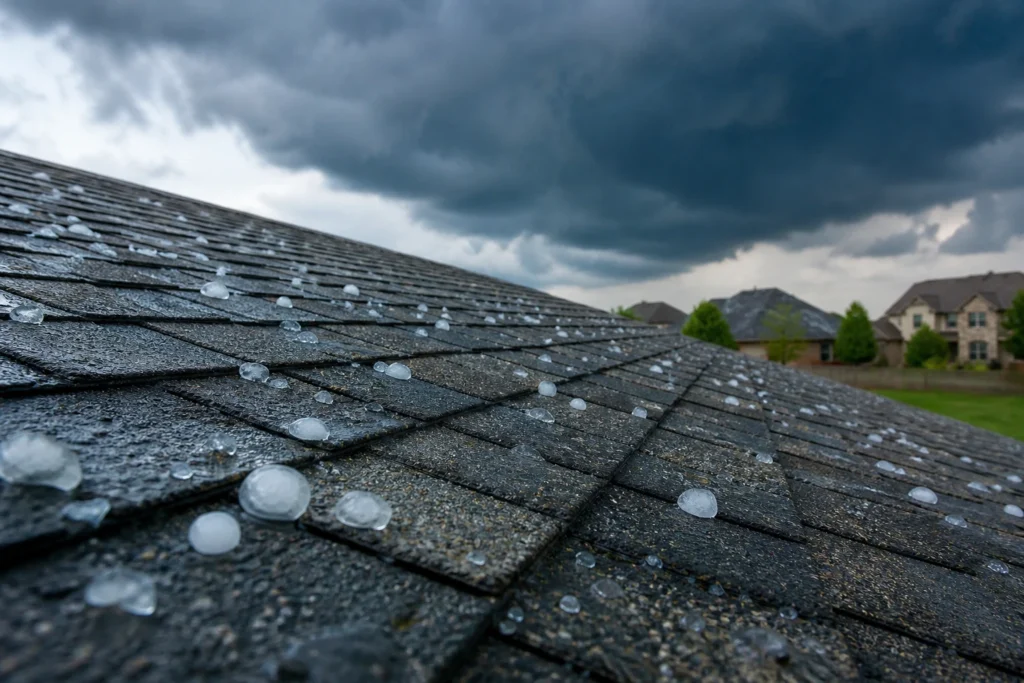
Texas isn’t just hail-prone. It’s hail-heavy. Large storm systems, volatile weather patterns, and seasonal shifts create the perfect environment for repeated impact damage. And that damage? It’s rarely as simple as it looks.
What Hail Actually Damages
- Asphalt shingles – granule loss, bruising, cracking
- Metal roofs – dents, coating damage, seam separation
- Tile roofs – fractures, displacement
- Soft metals – vents, flashing, gutters
- Interior spaces – leaks that show up weeks later
The problem is this: not all of that gets included in the first estimate.
Common Claim Issues
- Estimates that miss entire roof sections
- “Cosmetic damage” classifications
- Denials labeled as “wear and tear”
- Under-scoped repairs without code upgrades
And that’s exactly where the adjuster you’re dealing with starts to matter.
What Is an Insurance Adjuster?
Let’s start here. Because this is who shows up first.
Definition and Role
An insurance adjuster works for the insurance company. Their job is to inspect your property, assess the damage, and determine what the company will pay. Simple on paper. More complex in reality.
Types of Insurance Adjusters
- Staff adjusters – full-time employees of the carrier
- Independent adjusters – contracted, often during busy seasons
- CAT adjusters – brought in during major storm events
Each has one thing in common: they represent the insurer.
How They Handle Hail Claims
- Inspect the roof and exterior
- Take photos and notes
- Build an estimate using software like Xactimate
- Apply policy terms to determine coverage
It’s efficient. It’s structured. But it’s also controlled.
Pros of Working with an Insurance Adjuster
- No out-of-pocket cost
- Faster initial inspection
- Direct connection to the claim process
Limitations You Need to Know
- High claim volume means limited time per property
- Focus on cost containment
- Missed items aren’t always intentional but they happen
And when they do, it impacts your payout.
What Is a Public Adjuster?
Now we shift perspective.
A public adjuster works for you.
Definition and Role
A public adjuster is a licensed professional who represents the policyholder not the insurance company. Their job is to document, present, and negotiate your claim. Different alignment. Different outcome.
Core Responsibilities
- Review your insurance policy
- Conduct detailed inspections
- Document all damage thoroughly
- Prepare a comprehensive estimate
- Negotiate directly with the insurer
They don’t just observe. They build a case.
How Public Adjusters Handle Hail Claims
This is where things get interesting.
Instead of a quick inspection, they go deep:
- Identify hidden damage under shingles
- Include code-required upgrades
- Account for ventilation, flashing, and underlayment
- Build line-by-line estimates that reflect real repair costs
It’s detailed. It’s deliberate. And it often changes the entire claim value.
Pros of Hiring a Public Adjuster
- Higher settlement potential
- Less stress for you
- Professional negotiation
- Strong documentation
Potential Drawbacks
- They charge a percentage of the claim
- Not always necessary for small claims
But for complex situations? It can be a game-changer.
Side-by-Side Comparison: Public Adjuster vs. Insurance Adjuster
Let’s simplify it.
| Factor | Public Adjuster | Insurance Adjuster |
| Representation | You | Insurance company |
| Goal | Maximize payout | Control costs |
| Inspection | Detailed | Often surface-level |
| Negotiation | Yes | Limited |
| Payment | Contingency fee | Paid by insurer |
| Strategy | Proactive | Reactive |
This table alone explains why outcomes differ.
Key Differences That Impact Your Claim
Financial Incentives
Insurance adjusters are paid by the company. Public adjusters are paid based on your settlement. That changes behavior. It changes focus. It changes results.
Scope of Damage
Insurance estimates often focus on visible damage.
Public adjusters look beyond that:
- What’s underneath?
- What’s required by code?
- What was missed the first time?
That’s where additional value is found.
Documentation
Photos aren’t enough. You need structure.
Public adjusters organize:
- Wide shots
- Close-ups
- Labeled damage areas
- Written reports
It’s not just evidence. It’s presentation.
Negotiation
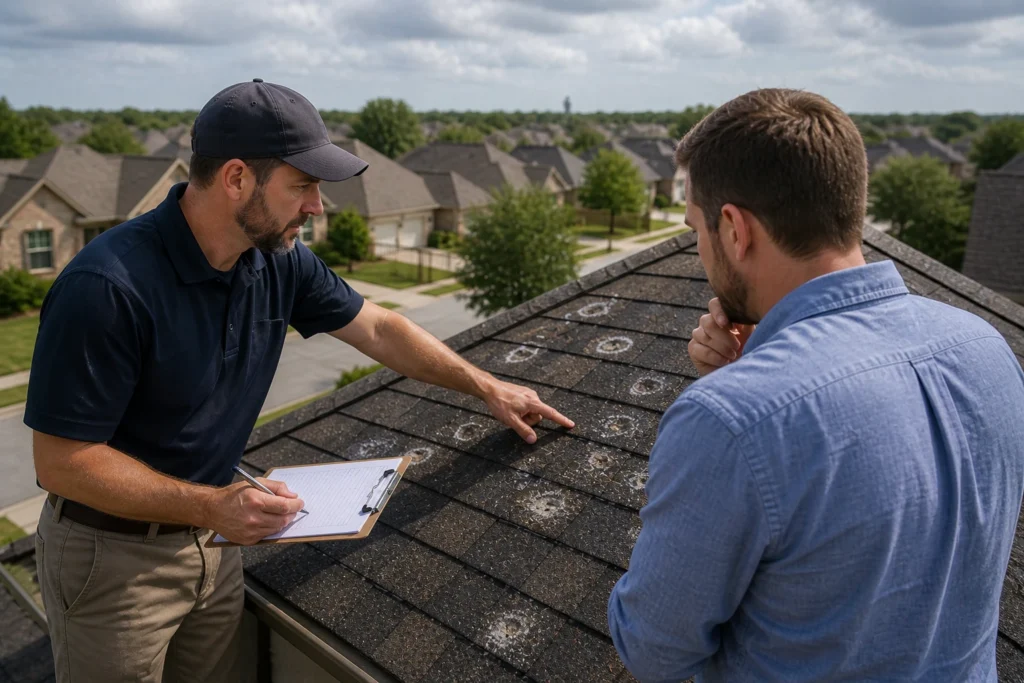
Insurance adjusters don’t negotiate in the way you think. They follow guidelines. Public adjusters push back. They challenge. They supplement. This is where Hail Damage Claim Supplements become critical adding overlooked items that significantly increase claim value. And that’s where claims evolve.
When Should You Hire a Public Adjuster?
Not every claim needs one. But some absolutely do.
Consider hiring one if:
- Your claim was denied
- Your estimate feels low
- Damage is extensive
- You don’t have time to manage the process
In areas like Pasadena, repeated storm exposure creates patterns. Claims often follow predictable gaps—missing items, undervalued repairs, incomplete scopes. Recognizing that early can save you thousands.
When You Might Not Need One
Let’s be fair.
You may not need a public adjuster if:
- The claim is small
- The insurance estimate is accurate
- There’s no dispute
In those cases, the process can be straightforward. But always verify before assuming.
The Real Cost vs. Value
This is where people hesitate.
How Public Adjusters Get Paid
Typically:
- A percentage of the final settlement
- Often ranging from 5% to 15%
Is It Worth It?
Let’s break it down:
| Scenario | Without PA | With PA |
| Initial estimate | $12,000 | $12,000 |
| Revised estimate | — | $20,000 |
| Fee (10%) | — | $2,000 |
| Net payout | $12,000 | $18,000 |
Even after fees, the difference is clear. Not always. But often enough to matter.
Common Mistakes Homeowners Make
These are costly. And avoidable.
- Accepting the first estimate
- Not documenting damage thoroughly
- Waiting too long to act
- Misunderstanding policy terms
The biggest one? Assuming the process is fixed. It’s not.
How to Choose the Right Public Adjuster
If you decide to go this route, choose carefully.
What to Look For
- Licensed in Texas
- Experience with hail claims
- Clear communication
- Transparent fee structure
Ask These Questions
- How do you document damage?
- What’s your negotiation process?
- Can you show past results?
Local experience matters too. Someone familiar with Pasadena understands regional building codes, storm behavior, and even how specific carriers handle claims in that area. That’s not minor. That’s leverage.
The Claims Process: Two Paths
Without a Public Adjuster
- File claim
- Insurance adjuster inspects
- Receive estimate
- Accept or dispute
Simple. But limited.
With a Public Adjuster
- Consultation
- Independent inspection
- Full documentation
- Claim submission
- Negotiation and supplements
- Final settlement
More steps. But more control.
Advanced Claim Strategies Most People Miss
This is where real value is created.
Supplements
Initial estimates are rarely complete. Supplements add missing items:
- Flashing
- Underlayment
- Code upgrades
Code Compliance
Local codes often require upgrades. If included, your payout increases.
Appraisal Clause
When disputes stall, this clause can force resolution.
Timing
Submitting evidence at the right moment changes outcomes. These aren’t tricks. They’re part of the process if you know how to use them.
Real-World Scenario
Let’s compare.
Case A: Insurance Adjuster Only
- Estimate: $14,000
- Missed items: ventilation, flashing
- Outcome: partial repair
Case B: With Public Adjuster
- Initial estimate challenged
- Supplements added
- Final settlement: $24,000
Same house. Same damage. Different approach.
Legal and Regulatory Considerations in Texas
Texas gives you rights. But you have to use them.
- You can dispute claim decisions
- You can request re-inspections
- You can file complaints
The system allows for correction. But it doesn’t do it automatically. Understanding timelines, documentation requirements, and escalation paths gives you leverage. When you know the rules, you stop reacting and start directing the process. That shift alone can change your outcome.
Deep Dive: Why Estimates Differ So Much
Let’s go deeper. Because this is where most homeowners get surprised. Two professionals can inspect the same roof and produce completely different estimates. That’s not random. It’s structural.
Line Item Detail
Insurance estimates often group repairs. Public adjusters break them down.
That means:
- Separate labor charges
- Accurate material quantities
- Inclusion of setup and safety requirements
More detail leads to higher accuracy. And usually, higher value.
Labor Minimums and Trade Separation
Roofing isn’t just roofing.
You may need:
- Roofing crews
- HVAC technicians
- Electricians
Each trade has minimum charges. If they’re not included, your estimate shrinks fast.
Waste Factors
Materials aren’t installed perfectly. There’s always waste.
Public adjusters account for:
- Roof pitch
- Complexity
- Material cuts
Insurance estimates often undercalculate this. That difference adds up.
The Psychology of Claims
This part isn’t talked about enough. Insurance claims are not purely technical. They’re behavioral.
Pressure to Close
Insurance adjusters handle volume. Their goal is to move claims forward efficiently.
That can lead to:
- Faster resolutions
- Less back-and-forth
- Lower resistance to initial settlements
Persistence Pays
Public adjusters operate differently. They revisit. They re-evaluate. They push. And over time, persistence often uncovers value that wasn’t included at the start.
Timing: The Hidden Advantage
Speed matters. But timing matters more.
Early Stage
Right after a storm:
- Inspections are fast
- Adjusters are overloaded
- Details can be missed
Mid Process
This is where strategy kicks in:
- Supplements get submitted
- Documentation improves
- Negotiation begins
Late Stage
If needed:
- Appraisal clauses are triggered
- Legal pressure increases
- Settlements shift
Knowing when to act is just as important as knowing what to do.
Final Verdict: Which One Should You Choose?
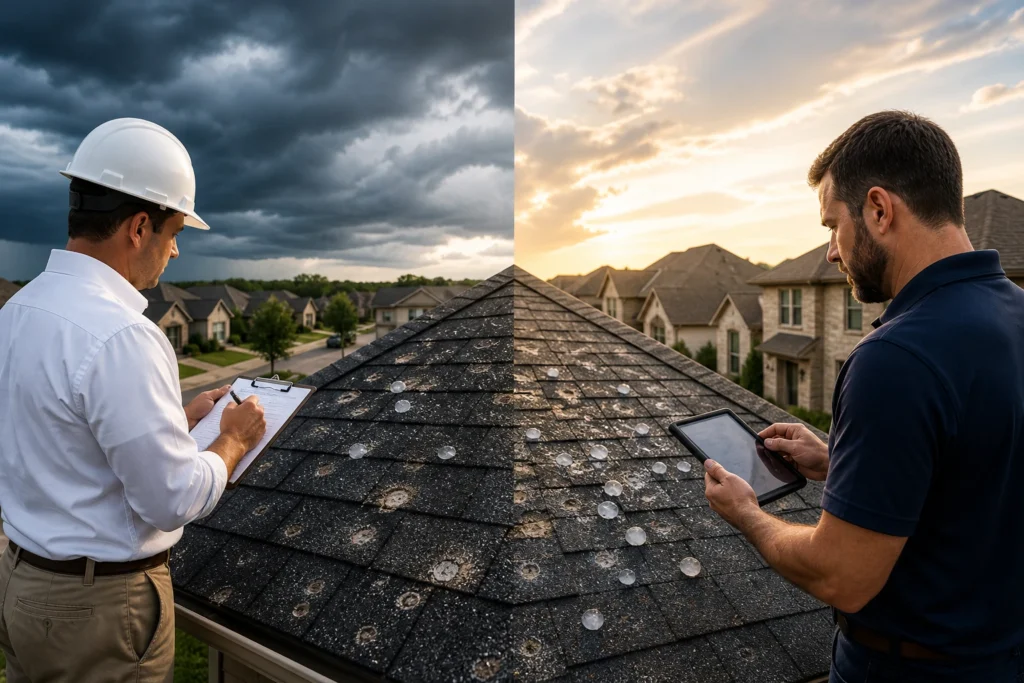
Let’s bring it together. If your claim is simple, undisputed, and fairly handled an insurance adjuster may be enough. But if there’s complexity, disagreement, or uncertainty? That’s where Public Adjuster vs. Insurance Adjuster for Hail Claims in Texas becomes a decision point, not just a comparison.
Because one works for the company. The other works for you. And that difference shows up in your final check. For many homeowners in Pasadena, the deciding factor isn’t just damage it’s confidence. Confidence in the estimate. Confidence in the process. Confidence in the outcome. If that confidence isn’t there, it’s worth exploring your options.
Final Conclusion: Control the Outcome
Let’s keep it simple. Your roof is damaged. You file a claim. Someone inspects it. From that moment forward, the outcome depends on who is driving the process. Understanding Public Adjuster vs. Insurance Adjuster for Hail Claims in Texas puts you in control. Not partially. Fully.
You decide how detailed the inspection is. You decide how strong the documentation becomes. You decide whether the first estimate is accepted or challenged. That’s power. And in a system where small details create big financial differences, that power is everything. Take the time. Ask the questions. Verify the numbers. Because the difference between a standard claim and a fully optimized one isn’t luck.
It’s strategy.
Additional Insight: Complexity and Precision
At a deeper level, insurance claims behave a lot like complex systems. Small inputs can create large outputs. Minor details can shift entire outcomes. If you’ve ever studied something like Chaos theory, you understand how sensitive systems can be to initial conditions. Your claim works the same way. One missed line item. One overlooked code requirement. One incomplete inspection.
That’s all it takes to change your payout dramatically. Which is why understanding the full scope and choosing the right representation isn’t optional. It’s essential.
FAQs
A public adjuster represents you, while an insurance adjuster represents the insurance company.
No, most public adjusters work on a contingency fee, meaning they get paid a percentage of your final settlement.
Yes, in many cases they identify missed damage and negotiate a higher settlement.
You should consider one if your claim is denied, underpaid, or involves significant damage.
They aim to follow company guidelines, which can sometimes result in lower estimates.
Supplements are additional claims submitted to include missed or underestimated repair items.
It can take weeks to months depending on complexity and whether disputes arise.
Usually not, as the cost may outweigh the benefit for minor damage.
Yes, you can request a re-inspection, submit documentation, or hire a public adjuster.
Yes, local building codes, storm patterns, and insurer practices can influence claim results.