
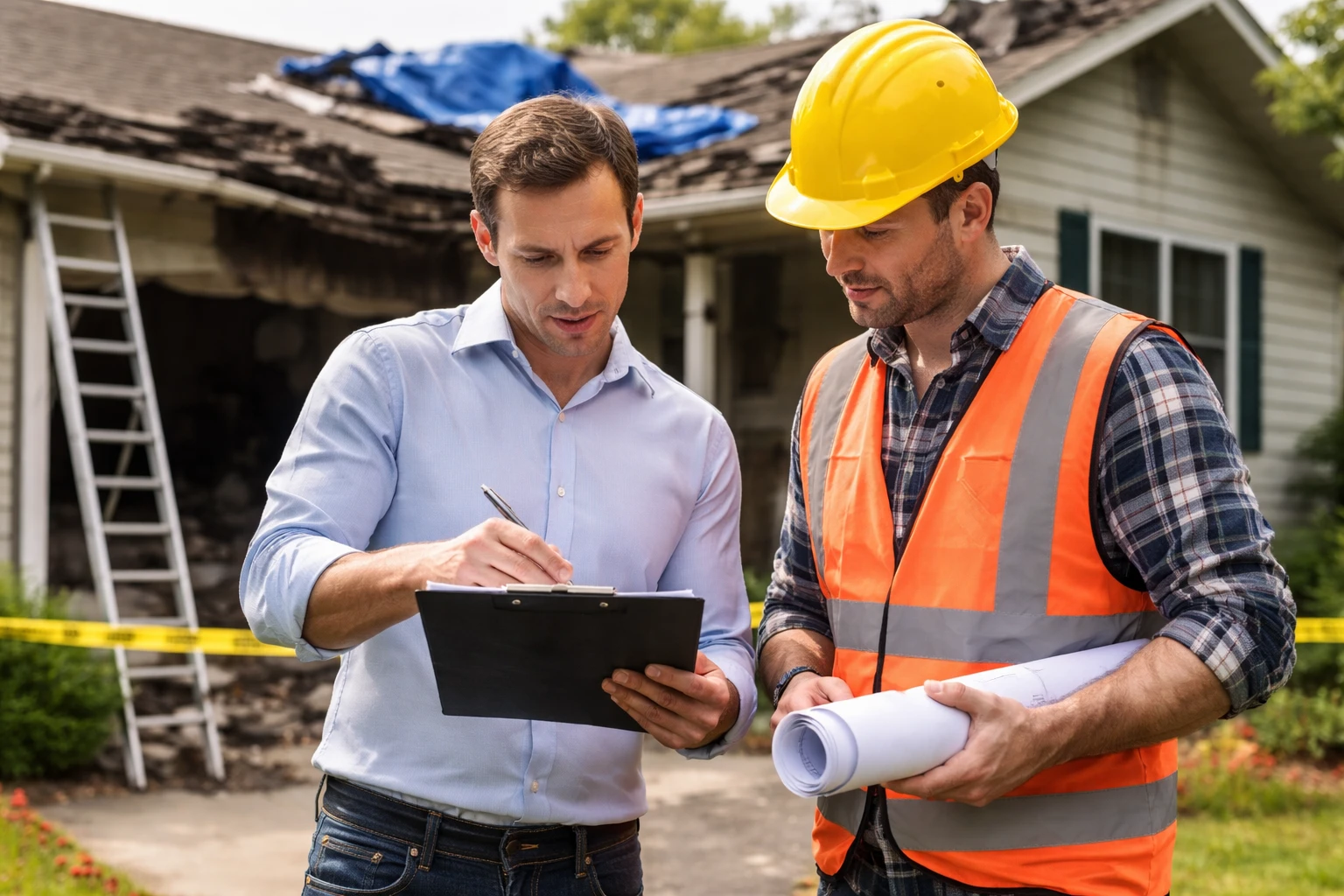
Insurance claims can feel like a maze. One moment you’re dealing with property damage, the next you’re speaking with adjusters, contractors, and insurance representatives. It moves fast. And somewhere in the middle of the process, many homeowners ask a critical question: can a public adjuster work for a contractor?
It sounds simple. But the answer carries real legal and ethical weight.
When a home in Pasadena suffers storm damage, fire loss, or water intrusion, two professionals often enter the conversation quickly: the public adjuster and the contractor. One helps manage the insurance claim. The other repairs the damage. Their roles are different, yet they often appear in the same conversation.
So naturally people wonder — can a public adjuster work for a contractor?
Short answer: usually no. At least not in the way many people assume.
But the details matter. And if you’re navigating an insurance claim, understanding the relationship between these professionals can protect you financially and legally.
Let’s break it down.
Understanding the Role of a Public Adjuster
A public adjuster works for the policyholder. Not the insurance company. Not the contractor. The homeowner.
That distinction matters more than most people realize.
When property damage occurs, insurance companies assign their own adjuster to evaluate the loss. That adjuster represents the insurance company’s interests. A public adjuster, on the other hand, represents the property owner.
Their job is straightforward but powerful.
They help maximize the accuracy and fairness of your claim.
Typical responsibilities include:
- Inspecting property damage
- Reviewing the insurance policy
- Documenting losses in detail
- Preparing claim estimates
- Negotiating settlement amounts with insurers
- Managing claim paperwork
In other words, they focus on the insurance side of the claim.
Public adjusters are also licensed professionals. In many states, including Texas, they must meet licensing requirements and follow strict regulations designed to protect consumers.
Their loyalty is to the policyholder.
Not to repair companies.
That’s where the key question comes into play.
What Contractors Actually Do During an Insurance Claim
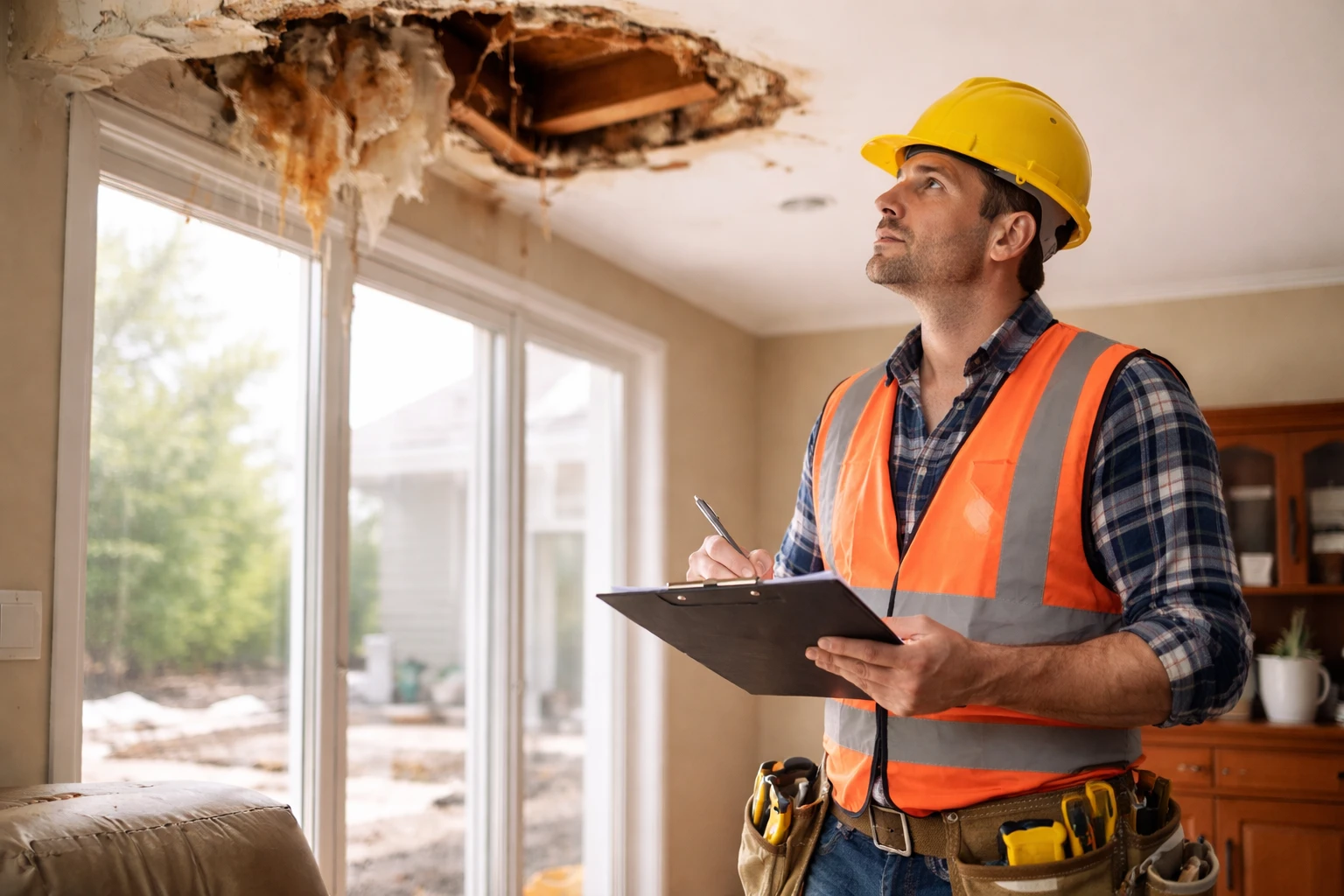
Contractors serve a very different role.
They repair the property.
When a home suffers damage, contractors step in to:
- Inspect structural damage
- Provide repair estimates
- Perform reconstruction work
- Replace damaged materials
- Restore the property to its original condition
Think of them as the builders and restorers.
Contractors often interact with insurance companies because their repair estimates become part of the claim documentation. But they are not licensed to negotiate insurance settlements on behalf of the homeowner.
That role belongs to public adjusters.
And mixing the two roles can create problems.
The Big Question: Can a Public Adjuster Work for a Contractor?
Let’s address the question directly.
Can a public adjuster work for a contractor?
In most cases, the answer is no.
Public adjusters are required to operate independently from contractors because combining those roles can create a conflict of interest.
Here’s why.
If a public adjuster worked for a contractor, they might have a financial incentive to increase the repair scope in order to generate more construction work. That could influence claim decisions and compromise the fairness of the process.
Insurance regulations aim to prevent that scenario.
Most states prohibit public adjusters from:
- Being employed by contractors
- Sharing profits from repair jobs
- Accepting referral fees tied to construction work
- Steering clients toward specific contractors for financial gain
The goal is simple.
Protect homeowners.
So when homeowners ask can a public adjuster work for a contractor, regulators usually draw a clear boundary: the adjuster handles the claim, and the contractor handles the repairs.
Separate roles. Separate responsibilities.
Why Insurance Laws Keep Adjusters and Contractors Separate
Insurance claims involve significant money. Sometimes tens or hundreds of thousands of dollars.
That makes transparency critical.
When the same party influences both the claim value and the repair cost, it can distort the process.
Regulators worry about several risks:
- Inflated repair estimates
- Manipulated damage documentation
- Pressure placed on homeowners
- Biased negotiations with insurers
Keeping public adjusters independent prevents these issues.
The separation creates checks and balances.
One professional evaluates the claim. Another performs the repair. Each focuses on their specialty without financial influence from the other.
That’s why the question can a public adjuster work for a contractor almost always results in legal restrictions.
Legal Boundaries That Govern Public Adjusters
Public adjusters operate under strict rules.
State insurance departments license and regulate them to ensure fairness in the claims process. In Texas, these rules are particularly clear about conflicts of interest.
Most regulations prohibit public adjusters from:
- Receiving contractor kickbacks
- Owning construction companies involved in the claim
- Referring repair work for profit
- Working as employees of repair contractors
These rules exist for one reason.
Consumer protection.
Insurance claims rely heavily on trust and documentation. Maintaining independence between claim negotiators and repair contractors protects that trust.
So again, when homeowners ask can a public adjuster work for a contractor, the regulatory answer is designed to keep those roles separate.
When Public Adjusters and Contractors Do Work Together

Here’s where things get interesting.
Even though a public adjuster cannot usually work for a contractor, they often work alongside contractors during a claim.
Collaboration is common. Employment is not.
For example:
A contractor may inspect the damage and provide a repair estimate. The public adjuster may use that estimate when negotiating the claim with the insurance company.
Both professionals contribute expertise.
But they remain independent.
Typical collaboration looks like this:
- Contractors provide repair scope and pricing
- Public adjusters verify damage and policy coverage
- Adjusters negotiate claim settlements
- Contractors perform the repairs once approved
This cooperation is legal because each professional stays within their role.
No shared financial incentives. No employment relationships.
That’s the difference.
How Insurance Claims Typically Unfold
Understanding the typical claim process helps clarify why independence matters.
Here’s a simplified claim workflow:
| Step | What Happens | Who Is Involved |
| 1 | Property damage occurs | Homeowner |
| 2 | Insurance claim is filed | Homeowner |
| 3 | Damage is evaluated | Insurance adjuster / Public adjuster |
| 4 | Repair estimates created | Contractor |
| 5 | Claim negotiation | Public adjuster |
| 6 | Settlement approved | Insurance company |
| 7 | Repairs begin | Contractor |
Each professional has a defined role.
Mixing those roles could compromise the fairness of the claim.
Which is why people often search for clarity around the question can a public adjuster work for a contractor.
Benefits of Keeping Public Adjusters Independent
Independence isn’t just a regulatory rule. It actually benefits homeowners.
When adjusters and contractors operate separately, several advantages emerge.
1. Objective Claim Evaluation
Public adjusters can evaluate damages without pressure to increase construction work.
2. Transparent Repair Estimates
Contractors provide realistic repair costs without involvement in claim negotiations.
3. Reduced Legal Risk
Homeowners avoid entering agreements that could violate insurance regulations.
4. Stronger Claim Negotiation
Public adjusters focus entirely on maximizing the claim settlement.
5. Greater Trust in the Process
When each professional stays in their lane, homeowners gain confidence in the outcome.
These benefits explain why the industry keeps revisiting the question can a public adjuster work for a contractor.
The answer protects the integrity of the system.
Questions Pasadena Homeowners Should Ask Before Hiring Help
Before hiring anyone to assist with an insurance claim, it’s smart to ask a few direct questions.
A reputable professional should answer these clearly.
Consider asking:
- Are you licensed as a public adjuster?
- Do you have any financial relationships with contractors?
- How are your services compensated?
- Will you recommend contractors for repairs?
- Can I choose my own contractor?
These questions reveal potential conflicts quickly.
Remember, when evaluating claim professionals, you want transparency above everything else.
Warning Signs of Unethical Claim Practices
Unfortunately, not every claim professional follows best practices.
Watch for these red flags.
Contractors claiming they can “handle the entire insurance claim”
Contractors can estimate repairs, but they typically cannot legally negotiate insurance settlements.
Adjusters guaranteeing a specific settlement amount
Insurance outcomes depend on policy coverage and damage documentation.
Shared contracts between adjusters and contractors
This may indicate financial connections that could violate regulations.
Pressure to sign immediately
Professional claim assistance should never rely on urgency tactics.
If you notice these behaviors, pause and investigate further.
They often connect back to the same underlying issue behind the question can a public adjuster work for a contractor.
Why Pasadena Homeowners Often Ask This Question
Pasadena homeowners frequently encounter this question after major weather events.
Storms. Hurricanes. Severe winds.
These disasters can damage roofs, siding, and interiors across entire neighborhoods. Contractors often arrive quickly offering inspections and repair services.
During these conversations, homeowners sometimes hear that a contractor can “bring in” a public adjuster.
That’s where confusion starts.
While adjusters and contractors may collaborate, they should not be financially tied to one another.
Understanding that distinction can prevent costly mistakes during the claim process.
Final Thoughts: The Real Answer to the Contractor Question
Insurance claims involve multiple professionals. Each plays an important role.
But those roles must remain separate.
So let’s return to the question one more time.
Can a public adjuster work for a contractor?
In most situations, the answer is no.
Public adjusters are expected to remain independent to protect homeowners and maintain fairness in the claims process. Contractors repair the damage. Adjusters negotiate the claim. Each professional contributes expertise without influencing the other’s financial outcome.
For Pasadena property owners navigating insurance claims, this separation is not just a legal technicality.
It’s protection.
When hiring help after property damage, verify licenses. Ask direct questions. And ensure the professionals working on your claim operate independently.
That’s how you keep the process transparent, fair, and focused on what matters most — restoring your home and securing the settlement you deserve.
FAQs
In most cases, no. Public adjusters are required to remain independent from contractors to avoid conflicts of interest during insurance claim negotiations.
Insurance regulations often prohibit this relationship because it could influence claim evaluations and repair estimates, potentially leading to unfair claim practices.
A public adjuster may suggest contractors, but homeowners should always choose their own contractor to ensure transparency and avoid potential conflicts.
Generally, contractors cannot legally negotiate insurance claims on behalf of homeowners unless they are licensed as public adjusters.
Yes, they may collaborate during a claim, but they must remain independent and cannot share financial interests in the repair work.
Many homeowners consult a public adjuster first to assess the claim, then hire a contractor to provide repair estimates and perform the work.
Yes, public adjusters must be licensed in most states and regulated by state insurance departments to ensure ethical claim handling.
Public adjusters typically earn a percentage of the insurance settlement, which is agreed upon in a contract before they begin working on the claim.
Red flags include guaranteed settlement promises, pressure to sign contracts quickly, or contractors claiming they can fully handle your insurance claim.
In many cases, yes. A public adjuster can manage the insurance claim while a contractor handles the repair work once the claim is approved.